

Bella Terra Stables brings the magical impact of horses — and powerful personal growth — to local students
One morning earlier this fall, a cluster of sixth-graders filed out of East Allegheny School District’s Logan Elementary. As they walked toward a patch of grass beside their school, some kids noisily jostled one another — their adolescent energy crackling in the air. Others stared off in the distance, seemingly lost in their own thoughts.
But it took only minutes for this entire group to begin watching the surprising activity unfolding in front of them. Two beautiful horses, Dylan and Buttercup, were nibbling blades of grass inside a temporary ring. They had come from Bella Terra Stables, an organization working with a growing number of Pittsburgh-region schools and communities to provide equine therapy, social skill-building and grief support.
These horses function as co-workers, but they’re not best friends. As the students lined up along the ring just a few feet from these remarkable animals, they began learning about the strategies that Buttercup and Dylan use to get along even when they frustrate each other.

The focus was on the horses, but you could see the kids making connections to their own lives: After staring each other down and whining a bit as an altercation threatened to erupt, these two creatures opted to put a few feet of distance between themselves. They turned away, no longer staring face-to-face.

Then they began concentrating separately on an activity they both enjoy (the aforementioned grass nibbling), rather than dwelling on each other’s mildly annoying presence. It was clear that they’d each chosen to let a moment of conflict go, rather than stewing about it. And Buttercup visibly took comfort in having her good friend, trainer and therapist Ilse Eisele, standing right nearby.
“Can they be in a herd together without being the best of friends? They can. That’s how they survive,” said Laura Wurzell, who Bella Terra co-founder Amber Power describes as the team’s “kid whisperer.”
Humans, Wurzell told the kids, don’t always get along with the rest of their herd. “Or, as people, we think we can’t. We say, ‘I don’t like them, I can’t work with them in math class. I don’t like them, I can’t be in their homeroom. I don’t like them, I can’t sit at that lunch table.’ But yeah, you can.”

THE POWER OF EQUINE THERAPY
If you’ve watched students tune out during lessons or assemblies about social skills, you might be surprised at the level of attention students will pay to their equine therapists during Bella Terra’s Thrive All Year program, now in its second year at East Allegheny.
“We can stand up there as adults and tell them about emotions and stuff,” Power says, but watching two large, living beings practice coping skills in real time has a unique impact. To further connect with students, Power and the team often share the horses’ surprisingly relatable backstories, including trauma that can make it harder for horses like Dylan to handle their emotions.

Just as these messages were sinking in with the Logan Elementary kids, things got even more interesting. With supervision, they entered the ring in small groups, quietly approaching the horses and reaching up to gently pet their hides. An even more palpable atmosphere of calm had grown among these adolescents. They were listening. They were learning.
You can attribute some of that to survival instincts: You’ve got to pay close attention when you’re interacting with a thousand-pound creature, Eisele points out. But there’s more to it. The connection between humans and horses has been experienced for millennia and today there is a growing body of academic research exploring the measurable psychological and physiological impact of equine therapy.
Horses are herd animals. Just like humans, getting along with their community is central to their well-being. When horses are together, their heartbeats sync with one another. When a human spends time with a horse, the same thing happens.

Victoria Emery, the guidance counselor for East Allegheny’s grades 4 through 6, has been struck by the calming effect the horses have on her students:
“Some of these kids, their nervous systems are just always dysregulated,” Emery says. On a recent visit to the stables, “I watched them approach these horses, and work with the staff at Bella Terra, and you could just see their brains settling. And it was amazing.”

TIERED SUPPORT, CRAFTED FOR EACH GRADE
“Each partnership is uniquely tailored to meet the needs of the students and schools we serve,” says Bella Terra’s outreach coordinator Laura McGee. “While our equine-assisted learning program is therapeutic in nature, it’s structured as a learning experience.”
Working with young elementary students all the way up to high schoolers, Wurzell says, “many of our topics are the same across grade levels, because the social/emotional skills are universal in nature.” Strategically, though, the team adjusts the vocabulary and the situational role playing they use, as well as the speed at which they deliver information, based on the students’ ages.
At East Allegheny, which was the first district to participate in Thrive All Year, the Bella Terra team brings horses for a visit once a month, working with different grades on each visit. That’s Tier One of the program, with targeted lessons for each grade designed in partnership with the school’s counselors and teachers.

These might include self-regulation skills (deep breaths and taking a pause, or expressing emotions safely), non-verbal communication skills or methods for managing big emotions.
For this year’s sixth-graders, Emery says, “I asked specifically for conflict-related things, because that’s what I’m focusing on in my SEL lessons. It’s really important to have that continuity.”
Teachers and guidance counselors also get ongoing resources in the form of Google Slide decks, which allow for follow up learning after each of the visits and a shared vocabulary around skill-building.
For some students, Tier Two is also part of the package: “The school identifies a group of core kids that come to us for the whole school year,” McGee says.
This Tier Two group, which includes 3rd through 8th graders this year, make monthly visits to the stables together. During these two-hour experiences, they build a relationship with a specific horse.

The group explores ideas like observation vs. perception (what you see vs. what you think) and practices calming their bodies while working with horses (emotional self-regulation).
Older and younger students work together learning to groom, feed and care for horses (building trust, confidence, and responsibility) and lead the horses on walks (building self-control through staying focused, following directions, and self-regulation skills). They build teamwork/collaboration and problem-solving skills in the process, learning new ways to deal with big emotions and hard things as they witness the horses handling their own challenges.

Students are excited to be chosen for this Tier Two group: “Just being selected — that, in and of itself, has changed some of their behaviors,” Emery says. “The ones that have been selected, they normally don’t get to shine.”
But at the stables, she says, “they feel like out of hundreds of kids, and I’m the one that gets to do this.”
Related Stories

Check out these opportunities for teens in 2026 at SLB Radio

Community, joy and honest conversation: What did parents and students discover at this year’s Uncommon Conference?
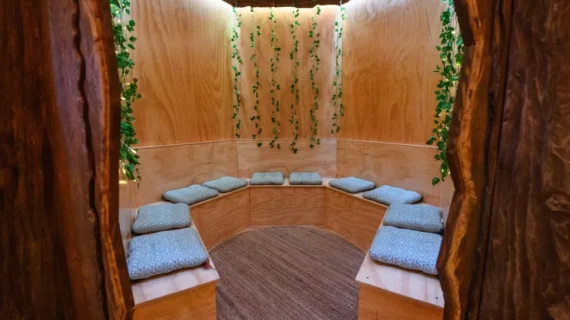
‘Some kids don’t really have anyone to talk to or trust.’ Chill Rooms are filling that gap.

The Mentoring Partnership of SWPA turns 30! This story might just inspire you and your children to get involved.

4 great places to boost your family’s wellbeing with a winter hike in the Pittsburgh area

Learning happens everywhere: Check out local ‘literacy corners’ on KDKA-TV’s Talk Pittsburgh

6 steps to help manage holiday stress or sadness this year

Teacher shortage: 3 new local programs blaze new pathways to teacher certification in Pittsburgh

How do local mental health experts know how to best help kids? They rely on evidence-based practices.

Why kids feeling safe matters more than being ‘caught up’

You can help your teens navigate high school with this insight from their local peers

From normal worries to warning signs: What families need to know about kids’ mental health

So your teen likes metal music? This writer doesn’t want you to worry.

Will phone rules at schools change this year?

Kidsburgh’s Family Yoga Guide: fun and wellbeing for all ages

Innovative school districts are balancing the best of digital learning with powerful face-to-face experiences
