
Kidsburgh Guide: Talking with young kids about race
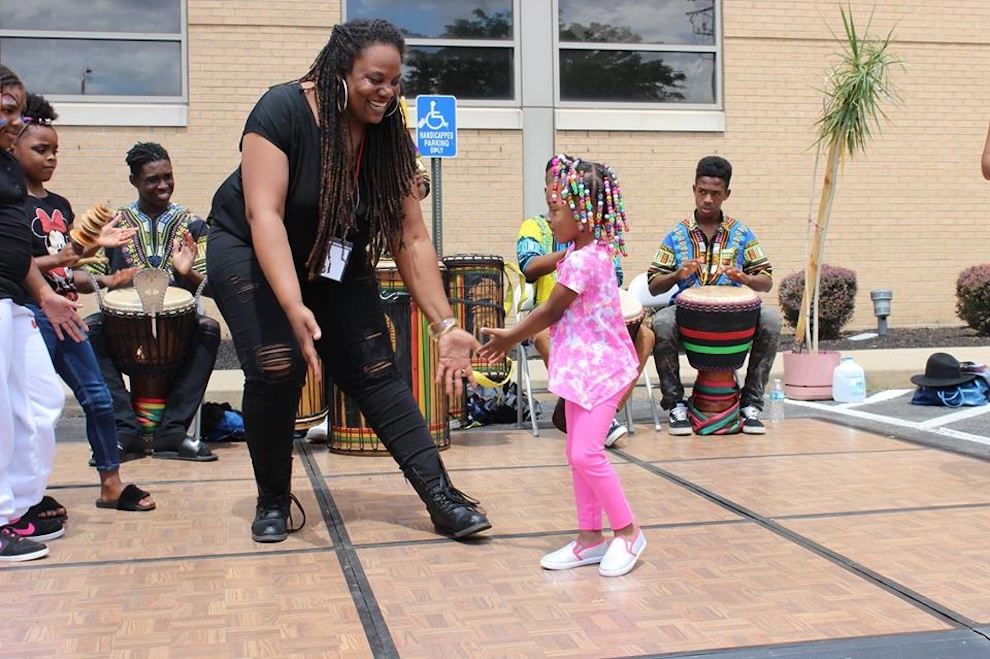
Photo above of Medina Jackson dancing with a child at a Pop Up Mini Art Festival courtesy of P.R.I.D.E.
We teach children how to say please and thank you, to look both ways before crossing the street, and to be kind to their classmates. But when a child asks, “Why is that child’s skin darker than mine?” many adults find themselves at a loss for words.
Medina Jackson wants to change that.
As the new director (formerly director of engagement) at the P.R.I.D.E. Program (Positive Racial Identity Development in Early Education) at the University of Pittsburgh, Jackson spends her days helping families and educators build the tools to answer these big, often unexpected questions.
Her work is based on one central truth: Children are not colorblind. Waiting to talk to them about race is not only ineffective — it can be harmful.
Noticing Difference Begins Early
Jackson defines positive racial identity as a child’s ability to feel good about themselves as racial beings and about the collective racial family they belong to. She notes that for older children, a strong sense of racial and ethnic identity has been tied to higher self-esteem, better academic performance and greater resilience. Even among kids under 6, research shows that positive racial identity correlates with improved memory, problem-solving and behavior.
From infancy, children begin absorbing racial cues. By three months, babies can visually categorize faces based on race and gender, and show a preference for faces they see more frequently. By nine months, unless exposed to a variety of races through books or daily life, they begin to lose the ability to recognize unfamiliar faces. By the toddler years, kids are already using racial categories to make sense of the world. By preschool, many are assigning traits to those categories, often reflecting the social hierarchies they have observed.
Despite this, Jackson says many caregivers believe that young children are too young to discuss race. And yet “children are already having racialized experiences, receiving messages about race, and assigning meaning to those messages and experiences,” she says.
The idea that kids pick up their beliefs about race only from their parents is another misconception. Messages come from everywhere: classrooms, media, playgrounds, even who they see in their neighborhoods and who they do not.
“When my son was a young child,” Jackson recalls, “he brought ideas home about race that we did not teach him.”
When Adults Do Not Feel Ready
Caregivers often fear getting it wrong. Jackson acknowledges that this is normal and even expected. She encourages what she calls “compassionate self-interrogation” — an honest look at one’s own racial education or lack thereof. Many adults never had meaningful conversations about race growing up, especially in school, so it can be natural to feel unprepared.
“Sometimes, you will get something wrong,” she says. “But we usually have an opportunity to recover or at least acknowledge that we were wrong and work toward repair.”
When children ask difficult questions, it is okay to pause. Jackson suggests simply saying, “I’m not sure right now, but this is very important and we will talk about it again soon.”
The key is this: Be intentional and make sure that you come back to it.
She also urges caregivers to reflect on their own experiences and to take stock of what they are modeling. If you value diversity, she asks, does that show up in your friendships, in your child’s books and media, in who they interact with?
Resources like “So You Want to Talk About Race” by Ijeoma Oluo and “My Racial Journey” from the University of Pittsburgh’s Office of Child Development can help adults start building the language and confidence needed to have these conversations.
Making Conversations Everyday and Joyful
According to Jackson, it is important to distinguish between talking about race and talking about racism. When race comes up, adults often tense up, assuming the conversation will be painful or political. But for young children, these moments are usually rooted in curiosity: noticing hair texture, skin color, or eye shape.
“Their questions and comments largely stem from observing the people and world around them,” she says. “Some of which may be familiar or unfamiliar, which is normal.”
Jackson recommends starting early and being proactive. This can mean intentionally reading books that celebrate diverse skin tones, singing songs that affirm difference, or doing art projects that explore each child’s identity. Books like “All the Colors We Are” are great entry points.
When conversations do turn toward injustice, Jackson points out that young children already understand the concept of fairness. This makes it easier to introduce the idea of racism through stories about freedom fighters or allies who worked to make things fair.
It is especially important, she adds, for White children to learn about White abolitionists and accomplices throughout history. She also encourages caregivers to speak positively about the word “brown,” especially when referencing a child’s skin tone, which often carries negative connotations in our culture due to colorism.
When kids raise tough questions, Jackson says, caregivers do not always need perfect answers. Instead, she encourages curiosity: Ask children what they mean, where they learned something, and what they think.
Then circle back, find a helpful resource if needed, and reflect. Sometimes their context for a question or comment may be different than what appears in your mind.
She breaks it down into three strategies:
Be proactive: “As early as possible, normalize having dialogue in general, where everyone’s voice and questions are heard. That way, having a conversation about any topic, including race, won’t feel like as big of a deal. If you now know that children will be curious about race related similarities and differences, plan for it. Incorporate picture books like ‘All The Colors We Are’ and art activities where they can see, embrace and celebrate themselves and those different from them. Normalize speaking about race related topics in a matter of fact way versus it being something taboo. Use music, mirror activities and visual art. Make up songs of your own.”
Be responsive: “You cannot know every possible scenario that a child may bring to you, but it is important to address what you can in the moment. And if you need to revisit a topic later, do that. Resist the urge to ‘shhhh’ them. Otherwise, they will internalize that it is not safe or normal to talk about race.”
Jackson recommends asking questions like, “Tell me more,” “What makes you say that,” and “Where or who did you learn that from?”
Be reflective: “Check in with yourself. Review the experience or conversation you had. Think about what happened, what worked, what could have gone better, the support you need, how you’d like to show up next time, what did you learn, what do you still need to learn, etc.”
She also recommends “Raising Antiracist Children by Britt Hawthorne,” which includes practical conversational scripts.
Teaching Joy, Too
For Jackson, the work of racial identity development must be as much about joy as it is about justice. “Joy is incorporated in mostly everything we do,” she says.
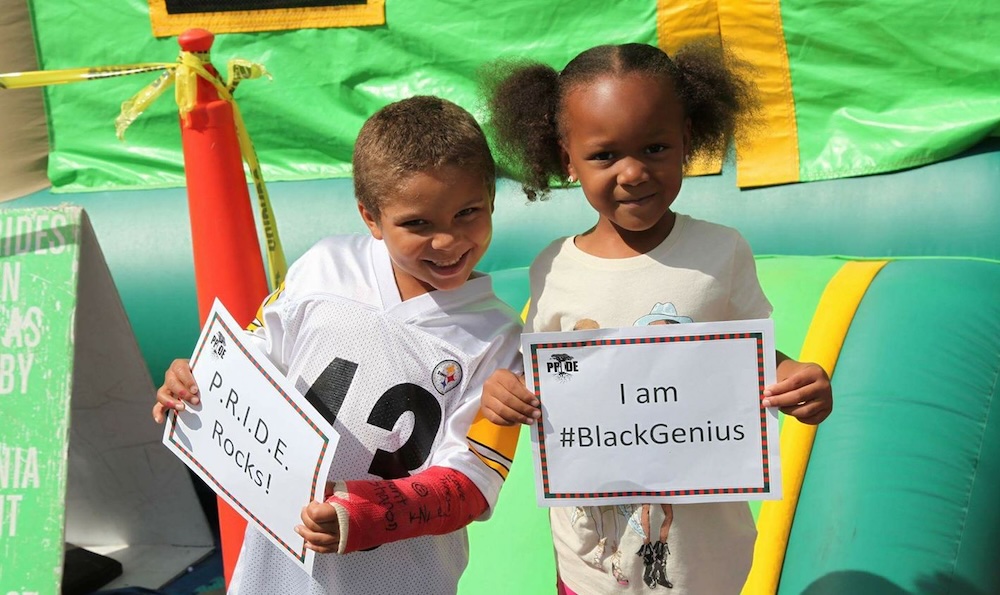
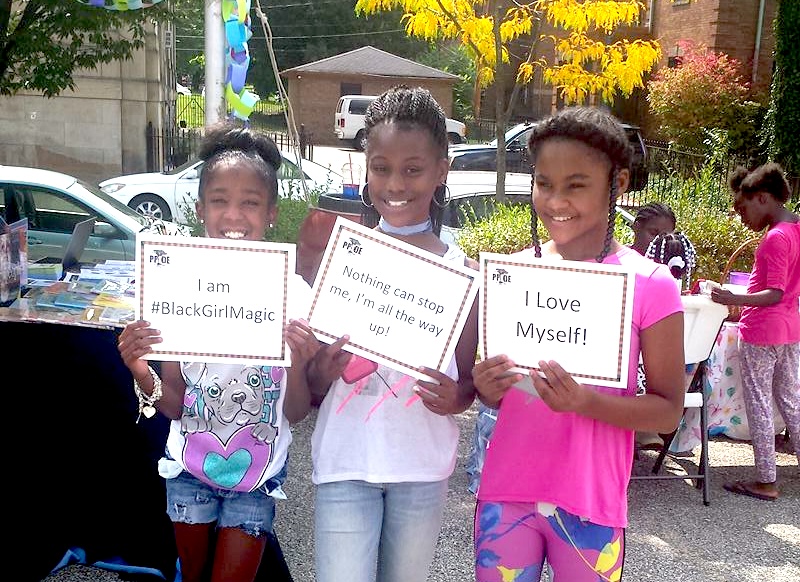
At The P.R.I.D.E. Program, professional development and parent workshops feature games and interactive moments that foster connection. In the community, P.R.I.D.E.’s neighborhood-based pop-up art festivals invite families to experience Africana arts, performances and learning through play.
“It’s important to empower ourselves with stories of resistance,” Jackson says. “To recognize our agency and ability to dream, and collectively co-create liberated spaces grounded in who we are and the vast expanse of our culture and heritage.”
A Moment That Stays With Her
One story continues to shape how Jackson thinks about the power of early intervention.
While co-facilitating a session with second-graders, she noticed a Black girl sitting off to the side. The session had not yet touched on race, but the girl quietly told Jackson that other people did not like her skin or hair.
“I validated her feelings, asked questions, affirmed her, told her how beautiful she is and how in our society, some people learn that darker skin tones and tightly coiled hair aren’t always considered beautiful,” Jackson says.
But, she told the child, “I want you to know that what they are saying is not true and there is nothing wrong with you… you are smart, creative and beautiful.”
Jackson continued to check in with the girl over the following weeks. Through art, discussions of melanin and affirmations, the classroom began to shift.
“They were able to do self portraits and find words that described their skin tone and write positive affirmations,” she says. “Over time, she spoke up in class more, and all of the children embraced that Black is beautiful through their art work and dialogue.”
What Pittsburgh Needs Next
To ensure that every child receives this kind of support, Jackson believes systems must evolve, too. She advocates for including racial identity development in Pennsylvania’s early learning standards as a core component of high-quality education.
“Positive racial identity is a developmental milestone for all children, and a normal, natural part of whole child development,” she says.
But policy alone will not get us there. Jackson stresses the need for everyone in the system — teachers, administrators, parents, board members — to be involved. “This work also works best when all stakeholders are participating,” she says. “We also need long-term funding and investment in this work.”
Where to Start
For families who want to go deeper, Jackson points to a wealth of tools:
- racepride.pitt.edu
- The In My Skin podcast
- EmbraceRace.org
- @AntiracistArtTeachers on Instagram
- Raising Race Conscious Children (website)
- Raising Equity podcast with Dr. Kira Banks
Because when a child asks, “Why doesn’t that child look like me?” they are not trying to start a debate. They are looking to be seen, and to understand themselves and the people around them.
With practice, honesty and joy, we all can respond in ways that build trust, connection, and pride.
Related Stories

Kidsburgh’s Family Yoga Guide: fun and wellbeing for all ages

The Open Learning Initiative is making sure today’s kids can be tomorrow’s STEM success story

YaJagoff and Pittsburgh Magazine launch PittsburgHER podcast for local women

CLP’s Best Books for Babies 2025 list is here

Rep. Deluzio reaches out to local districts about phones in schools

These Moonshot Grant projects helps local kids learn from, in and with nature

Books and beyond: Screen-free ways to build early literacy at home

Kidsburgh’s guide to creating your Summer Bucket List for 2025

Kidsburgh Neighborhood Guide: Explore Oakmont

Fred Rogers Productions receives $1.4 million from PNC Grow Up Great to support ‘Alma’s Way’ and Be My Neighbor Day
If you have a million feelings about motherhood, read this.

Heat and sun safety for kids: Check out this expert advice.

Want your family to spend less time on screens this summer? Here’s how to do it.

From ‘Streaming Justice’ to daily conversations, these ideas can help your child build empathy and social awareness

Celebrate Black history with these videos, lessons, podcasts & more from Common Sense Media
